Objections to ‘Cis’

Many women have written eloquently over the years about their objection to the word ‘cis’. According to those who wish to impose it on us, it is just the equivalent of using the word ‘straight’ to define yourself if you are not gay: without this word some people might be tempted to use the word ‘normal’ for their sexuality, thus positioning the other as ‘abnormal’. So far so understandable, but there’s a fundamental difference in the function of the words ‘straight’ and ‘cis’. ‘Straight’ has a definable meaning, which is ‘heterosexual: attracted to the opposite sex’. Even if homosexuality did not exist, heterosexuality would still be a meaningful definition – you don’t have to believe in homosexuality for heterosexuality to exist.

‘Cis’ however, does depend on a belief system to make it meaningful, and it is this which makes it more than a neutral descriptor. Cis is short for cisgendered, and the usual definition (apart from ‘not trans’) is having ‘a gender which matches your sex assigned at birth’. Immediately there are two major assumptions to challenge: sex is not ‘assigned’ at birth, it is recorded, and ‘gender’ is a concept which is rejected by many people and is in any case impossible to define. Calling me cisgender does not just say I am someone who is ‘not trans’, it ties me in to a belief system I don’t share and which I see as actively harmful, especially to women and girls. This is a perfectly understandable reason to reject the word ‘cis’ and that should be the end of it… but there’s more.

The unwanted labelling of ‘cis’ is enforced whether you like it or not. Many women object to being demoted to a subset of their own sex class, when previously the word ‘woman’ was sufficient and carried meaning. For a movement dedicated to the idea of always believing that people are what they say they are, there is a notable lack of acceptance of the position ‘I’m not cis’. According to the ideology you have to be either cis or trans, and this imposition of gender is one of the things that is most regressive about trans ideology. I didn’t spend a lifetime trying to escape the confines of the feminine gender box only to be forced into the restrictive cisgender box instead.

If you’re forced to accept the word ‘cis’ then you have to concede that women come in both male and female varieties. ‘Cis’ is the other side of the coin to the ‘transwomen are women’ mantra, in that it ensures the category of women contains both sexes. In this system a ‘transwoman’ is a male woman and a ‘cis woman’ is a female woman, and these are now equal subsets of the category ‘woman’. Cis is doing the job of letting men into the female sex class, and it means you can no longer be just a woman, you have to make a choice over what sex of woman you are.

An argument I have been seeing more frequently when women object to men in their spaces, is that it’s not ‘cis men’ who will be allowed in, but ‘transwomen’. Cis works here to differentiate between the men who are really male (cis men) and those who are really female (transwomen), and at the same time it puts ‘transwomen’ and women into the same category. However, without the belief system which says that women can come in both male and female varieties, it is not always possible on the ground to tell the difference between a ‘cis man’ and a ‘transwoman’, especially now that the bandwidth of ‘trans’ has been widened so exponentially. In accepting the word ‘cis’ you have lost the means to differentiate between men and women, because they both now come in both sexes.

Question: “What is the difference betweeen a cis man and a transwoman?”

Answer: “His say so”.

Once ‘cis’ has done its job of mixing up the sexes into a new gender-determined classification, a much bigger problem becomes clear. The two subsets of women (cis and trans) turn out to be not so equal after all. Cis is being used to posit an axis of oppression which subverts the usual order of things and places females as the oppressors of males: if women come in both cis and trans varieties it’s the cis ones who have the privilege. Cis privilege means that cis people oppress trans people, so it naturally follows that males are the most oppressed of all women. Once that’s established, then it’s clear that female women, with all their privilege, can no longer be allowed to organise alone without their male ‘sisters’. Groups like ‘Sisters not Cisters’ have sprung up to make sure we can never have anything just for ourselves ever again.

The result is that women are increasingly being called out when they prioritise ‘female women’, or leave out ‘male women’, in activities which were formerly perfectly well-understood as women-only. What once would have been celebrated as progressive for centering women, helping to promote justice, level the playing field or correct the male default, is now a sign of ‘transphobia’. Karen Ingala-Smith suffers periodic abusive Twitter pile-ons because her ‘Counting Dead Women’ project does just that, and Jean Hatchet endures a similar fate for her ‘Ride for Murdered Women’ fundraising bike rides. The Twitter accounts of ‘Women’s Art’ and ‘Great Women of Mathematics’ have had similar attacks from trans allies who cannot bear to see the word ‘woman’ being used without the inclusion of men. International Women’s Day has become just another opportunity on social media to insist that males must be included in the category of women.

It’s a double bind: we are apparently expected to adopt the categorisation of ‘cis women’ but then we are not allowed to organise as ‘cis women’.

Trans people on the other hand are allowed to have meetings and days of rememberance, days of visibility, and all manner of trans-only events and celebrations, without bomb threats or violence or protest. ‘Inclusion’ of other categories is not demanded of trans groups, it’s only demanded of women. When we are lambasted for ‘excluding’, there is no recognition that we are losing something we are entitled to, and often something we rely on. ‘Women-only’ has meant a place of safety or of sanctuary or of healing ever since second wave feminists fought for our rights as women, decades ago.

The Women’s Institute is the latest women’s organisation to come out as trans inclusive, which means it is no longer women-only. It is not just the case that women’s organisations have the choice whether or not to include males, it is now the fact that any which decide not to are hounded until they give in, or forever have to accept the label of bigoted transphobes. We are very nearly at the point where whenever we do anything for women we will have to include men. Many women are happy with this, actively wishing to include men who identify as women, and this is their choice. The choice though, for women who don’t want to, or can’t, include men, is dwindling. These women are often the most disadvantaged and vulnerable: sexual abuse or domestic violence survivors, prisoners, women who need refuge and women of particular faiths for example. For other women it’s just a matter of preference: the presence of males in the room makes a difference: men dominate, they talk louder, they interrupt more; sometimes you don’t want that; increasingly it’s being forced on you.

The implications of this are far-reaching. When services are advertised as ‘women-only’, or expected to be so because of social convention, then a possibility arises that a woman needing a male-free environment, for whatever reason, will at some point come across an unexpected male, possibly when she is in a state of undress or otherwise vulnerable. Very few women in this position will know what the new rules are. Not everyone is on Twitter. No woman can say on behalf of any other woman that it is now ok for ‘women-only’ to mean ‘both sexes.’ Nobody has that right. Each woman gives consent for herself and herself alone.

The equality law in the UK works by protecting certain characteristics that have traditionally suffered discrimination. Although ‘sex’ as a protected characteristic can be used to protect either sex, in reality sex discrimination mostly discriminates against women. The fundamental basis of women’s rights is a distinction between the sexes, allowing single-sex spaces and services where this is ‘a proportionate means of achieving a legitimate aim.’ It is the service which is judged by these criteria, not the individual wishing to use it, and up until now the aim of providing a healing space in which to recover from male violence has always met those criteria. Single-sex spaces are therefore ‘allowed’ by the law, even if the provision of them discriminates against another protected group.

It has been suggested many times (as a serious argument) that the aim to keep women’s toilets and changing rooms women-only would entail a policing of people’s genitals at the doorway, as if we were not very good at determining the sex of anyone we come across without checking their chromosomes or looking inside their pants first. Pictures of ‘passing transwomen’ are rolled out as a ‘Gotcha’, as though the successful feminisation of a single man disproves the male and female sex binary. It doesn’t though; quite the opposite: it highlights just how difficult it is to escape the confines of biological sex, with its combination of obvious and subtle visual differences. The problem is that you may say ‘transwoman’ but we see ‘male.’

What’s the difference again, between a ‘cis man’ and a ‘transwoman’?

His say so.

There is no definition of ‘ciswomen’ in law. ‘Ciswomen’ is not a protected characteristic. Choosing to use the definition ‘cis’ turns ‘woman’ into a two-sex category for which the law cannot deliver single-sex protection. Arguably, that’s the whole point of it. The protected category of sex becomes unworkable, and with it women’s basic rights. Distinct rights for women become impossible if ‘women’ includes ‘men’. If the use of the word ‘cis’ becomes normalised, then as females we will always be yoked to males.

Every manifestation of the word ‘cis’ is detrimental to women. There are no benefits. We have everything to lose. Don’t give in, don’t use the term ‘ciswomen’.

Why Can’t Women Just Be Nice?

How nice do women have to be?

Well, very, it seems, if we want to hold on to our rights. I’m talking about the rights which are already enshrined in law, by way of the Equality Act 2010, updating and incorporating the sex equality legislation from the Sex Discrimination Act 1975. Rights for women are based on sex, and they always have been, because there is no other legal or material or commonly recognised way of differentiating between men and women. Despite recent assertions from many lobbyists, we have never had to resort to looking inside someone’s pants to distinguish one sex from the other. The common understanding of what male and female categories mean, and the difference between them, has always sufficed to ensure that laws intended to level the playing field for women are actually used to benefit women. They may not always have been adequate to the task, but it’s always been clear who they’re for.

Women are expected to be nice in all walks of life, it’s true, and female socialisation works to prop up this expectation by a system of rewards and punishments as girls grow up. However, recently there has been a ratcheting-up of the demands that women be nice specifically in the arena of defending women’s rights. Being nice has become the number one demand made of feminists, above being fair or knowledgable or determined for example, and I wonder why it’s so important now?

One of the current attacks on women’s rights has taken the form of denying that women exist at all, at least as a distinct category. In normal circumstances this would be laughed out of court but it has gained traction because it has been linked (nefariously) to the supposed oppression of another group (trans people) and the campaign for trans rights has been so successful. To facilitate the demands of trans activists, women have been painted first and foremost as an obstacle to, and gatekeepers of, all the good stuff (including biology itself). The reason that women need sex-specific rights in the first place has been deliberately obscured, minimised and forgotten.

When Alice Roberts, scientist, posts on Twitter an article which posits that somehow, because of clownfish, it is impossible to accurately categorise binary human sex characteristics, feminist Twitter responds en masse. Feminist Twitter includes a lot of scientists and biologists. Many many women gently put Alice Roberts right. Some do it with impatience, some are critical, a tiny minority call her stupid or some such insult, but largely what we get is an astonishingly informative thread about human biology. With lots of evidence. This doesn’t stop people referring to it as ‘a pile-on’ and if Alice Roberts doesn’t post for a few days she will be said to have been ‘hounded off Twitter by trolls.’ Roberts herself says this:

Alice Roberts

When Jo Maughan, barrister, pontificates on Twitter about the right of trans-identified males to be housed in the female prison estate, feminist Twitter also responds. Feminist Twitter is full of lawyers, barristers and law students who really understand the law. They produce an informative thread, disagreeing with Maughan, based on the provisions in the law as it stands. One or two of them get irritated with his refusal to listen or to take on board any points they present as evidence. There might be the odd insult. Largely though the thread is an education on current UK equality law. Maughan thinks these women, rather than presenting their (very knowledgeable) side of the argument, are simply being bigoted:

Jo

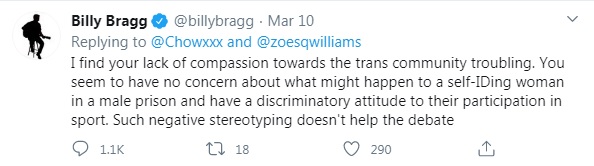
When Billy Bragg, socialist, argues on Twitter for the right of men who identify as women to be included in women-only spaces and sports, feminist Twitter responds again. Feminist Twitter is full of socialist and trade unionist women, grounded in class-based analysis and feminist history. They calmly put Billy Bragg right, based on a socialist analysis of women as a sex class. Occasionally there is a swear word, sometimes a tweeter sounds a bit exasperated, many women express their disappointment with him, but largely Bragg is repeatedly told facts. He responds by telling all these highly intelligent and caring women that they are lacking in compassion:

billybragg

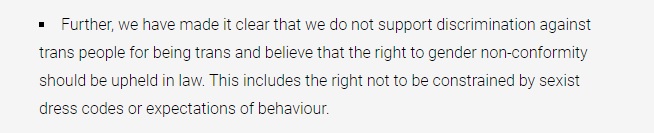
In the years since the 2015 Trans Inquiry, during which trans demands have been promoted and women’s rights have had to be defended, many grassroots women’s groups have grown up to do the work of protecting women in light of the fact that no one else was doing it for them. Over time there have been many meetings, blogs, tweets, speeches, essays, articles and submissions to government enquiries, all from women and women’s groups keen to protect their existing rights. An overriding sentiment, voiced repeatedly, is that trans people should of course have all the rights that everyone else has. Women have bent over backwards to ensure that the defence of women’s rights is in no way seen as a desire to reduce trans rights. All women’s groups want trans people to be free from abuse and to enjoy equal treatment in healthcare, employment and housing, and they frequently say so.

Woman’s Place UK state this:

WPUK

Fair Play for Women are clear on this:

Fair Play

Women and Girls in Scotland say this:

Women and Girls in Scotland

These sentiments are commonly and routinely expressed on social media by individual women too. It could not be clearer that the fight for women’s rights (which means existing rights, already fought for, well-researched and evidenced, and finally won) is not at the expense of trans rights and is not an attack on trans people. In comparison, no trans advocacy group (Stonewall, Gendered Intelligence, GIRES, Mermaids, TELI, Trans Media Watch, Allsorts and countless others) has once expressed the corresponding wish that the changes they are fighting for should not come at the expense of women and girls. There has never, in all their public campaigning, ever been a concern that other people’s rights might be affected by their demands, despite the fact that these demands do involve a rolling-back of women’s rights. To use a technical term, none of them actually gives a shit about women and girls.

This is, after all, what Stonewall, Gendered Intelligence and the Scottish Trans Alliance are fighting for:

Stonewall Trans Inquiry

But nobody is telling them to be ‘nice.’

At the same time as this complete disregard for women’s rights is being promoted as progressive, the insults, abuse and threats, as well as physical assaults, intended to silence women, go unremarked by the same prominent figures who implore women to be nicer, be kinder, be quieter.

The COVID-19 pandemic has shown up in stark relief the need for women to have single-sex spaces to provide refuge from male violence. Domestic abuse has increased markedly during the lockdown all around the world. Other traditional inequalities such as low-paid work and family roles conribute to the worse effect of the lockdown on women. If it wasn’t clear before, it’s clear now: the effects on women of being the subordinate sex according to their ‘gender’ include greater risk, greater violence and greater poverty. These gendered assumptions of the value (or lack of value) placed on ‘women’s work’ are part of the structure of gender that feminists have been fighting forever. We don’t like gender, we reject it and we are not hateful for doing so. It’s sensible; you can see that now. It is gender that disempowers women and girls.

Equally clearly, the coronavirus pandemic has highlighted the sex differences between men and women. Men are much more likely to die from the virus, and this is because of their sex, not because of their ‘gender identity.’ To science and biology deniers, for whom ‘transwomen are women’, the virus tells a different story. Initial studies show that women are more likely to catch the virus, because of their greater exposure, which is a result of the inequality of gendered roles and occupations, but men are more likely to die from it once they do catch it, because of their sex.

Is it still ‘unkind’ to insist that there is a sex difference between men and women and that it is straightforward (and vital) to categorise it? Is it still ‘lacking in compassion’ to analyse and assess a woman’s greater risk of harm according to gendered norms visited on her sex class? Is it still ‘bigoted’ to ask that women continue to be protected in law when these sex and gender differences in outcomes for men and women are now being highlighted so clearly?

Well, apparently yes.

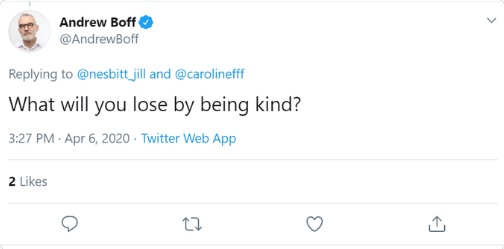
What will you lose by being kind

We have everything to lose, and I’m beginning to think that this is the point. The demand that women be ‘nice’ and ‘kind’ goes further than just being a matter of tone policing, it has an impact on what women are allowed to say, and how much we can expect to be listened to when we say it. Women are not just expected to be nice whilst fighting for our rights, we’re expected to be nice instead of fighting for our rights.

Here’s an idea: just for a change the world could try being nicer and kinder to women.

Equality Law in a Postmodern World

Always above all else: how does one act

If one believes what you say? Above all how does one act?

Bertolt Brecht – The Doubter

So let me play devil’s advocate for a minute and suggest that I actually agree with this new gender-based definition of human beings: that I accept the premise that the male and female categories are no longer useful or accurate and we need to completely change the way we see and account for one another. What we see with our own eyes is no longer necessarily to be trusted: we are likely to get it wrong if we rely on our senses alone. We must ask people how they identify, what pronouns they prefer and how they would like to be seen by us, and if we don’t do this we are disrespectful and even transphobic.

We are learning new things about gender all the time and we must take on board all these new discoveries. In this new and current scenario, male and female as characteristics no longer have any real meaning, and must instead be replaced with gender identity as the primary marker between different groups of people. Biological sex must give way to inner belief and innate identification, and it is on this basis that we must now look to the law and analyse the way it is formulated to protect particularly vulnerable groups of people. It has worked quite well (although not perfectly) up until now, in terms of protecting women from men and helping them to recover from male violence, as well as making social policy to ensure fair representation. But can it still work in the same way now that we know so much more about the way in which our gender identity informs our sex? Will it still do the job it was intended to do?

The first problem I can see is that the law as it stands is not at all equipped to deal with this new way of categorising people, because the law we enjoy today was written before we had all this new understanding of gender identity. We are therefore living in a world which finally recognises the supremacy of individual gender identity, but within a framework of equality law which doesn’t. This is a problem because equality law for women has been based on something that until now has been universally recognised – biological sex – and this is no longer relevant or even acknowledged. Sex differences have been used as the criteria for all the research and evidence gathered so far in order to inform public policy, as well as for legislation intended to level the playing field and keep women safe. The evidence which has been collected and analysed over the decades has shown clearly that biological males (boys, men) are responsible for most of the physical, sexual and violent crime, and biological females (girls, women) aren’t. It is on this basis that the Equality Act legislates, funding is made available and public policy is written.

We have legislation then, based on outdated criteria. We have a binary law for a spectrum world. A radical new understanding requires a radical new approach to the law. When there is such an unequivocal difference between the perpetrators and the victims of certain crimes, based on a measurable set of parameters, then it is inadequate to simply add to the protected group another category of people who do not share the discrete properties of that group. To do this would be to dilute the protection and make the group as a whole less safe. Fiddling around the edges of a law intended to protect a group which no longer effectively exists does not make good law: it lessens the protection for the original beneficiaries whilst not helping the new group it is supposed to include. Equality law based on sex is clearly no longer fit for purpose. A new set of laws is needed which is based on a new set of criteria which adequately reflects the modern world.

We need a complete overhaul of our equality laws, and as far as ‘sex’ goes we need to start from scratch. Anything less would just destroy the binary, and all the evidence and research behind it, without providing any back-up protection for the spectrum. Like the previous old-fashioned laws, the new laws must be based on adequate research and evidence, which this time must look at gender identity instead of sex. Statisticians must quickly get to work to assess which genders are more likely to be sexually violent, say, and which ones might be more likely to need protection. If the vulnerable are to be protected to the same degree as they are now there is little time to lose.

A problem can be seen straight away here of course, because an accurate means of assessing people, based on a quality seen only on the inside of their heads, does not immediately spring to mind. If a way can be found to overcome this difficulty then we can hopefully look forward to gender identity activists organising to provide all the evidence needed to ensure that the right protection can be put in place for the right genders. Much as women’s rights activists in the past insisted on this process and worked towards it to create a safer and fairer world for women, gender idealists must now do the same for all the genders. They seem to have confidence in themselves so let’s hope they get on with it.

There is still a problem though. Even if the gender activists manage to do their research and provide all the evidence needed in order to inform new and better equality legislation, it is still the case that ordinary people on the ground might not be able to instantly recognise the people who pose them the most risk. In the old-fashioned binary system between biological men and biological women it was relatively easy. In the vast majority of cases a man would be instantly recognisable as a man and a woman could rightfully object to his presence in her changing room. In this way, the use of the senses was in accord with social policy, and both worked together to keep a vulnerable group as safe as was possible. In today’s world this is no longer an acceptable way of keeping the vulnerable safe. It is after all impolite to assume someone’s gender.

I have given this some thought, because we cannot simply concede defeat on the basis that it’s all way too complicated. In today’s brave new world there will still be people of varying genders who are more in need of protection than others, and we need to find a way of identifying them and keeping them safe. If we can no longer rely on our senses to spot danger then the law as it stands will not work for us. We need to find a way to identify whichever genders the new research tells us are more prone to violence, and which genders will need the law to be on their side in order to protect them.

I think I’ve come up with a solution, and actually it’s so simple you’ll laugh. The answer has been staring us in the face all along. If we make legislation which demands the wearing of pronoun badges by all people in all circumstances at all times, then we’ve solved once and for all the problem of recognising the gender of the stranger in front of us. No longer will we have to rely on the Layla Moran school of soul recognition, which many of us still find impossible. Yes, I know, it feels a bit like the idea of identity cards for all citizens, which keeps rearing its ugly head and then once again being kicked into the long grass because nobody would stand for it in real life. But I think the public are ready to accept something like compulsory pronoun badges: a small thing really for the greater good. There are already many people on social media very willing to admit their gender identity to a watching public by putting their pronouns in their bios. It is surely a small step to ask everyone to wear a pronoun badge at every moment of the night and day, just to ensure the safety and comfort of vulnerable minorities? It is the only way I can think of, now we’re not allowed to use our common sense anymore, for everyone to be sure who they are sharing safe spaces with, and for everyone who needs it to have protection under the law. The census question would be solved in a stroke. Instead of asking numerous complicated questions about sex and gender, all these could be replaced with the one question which matters: ‘What are your pronouns?’

I think the world is ready for this, and it is in any case probably the only way a new gender-based Equality Act could work. I hope the lawyers amongst you will take this on board and begin to work towards a new law fit for the postmodern world. The Equality Act 2020: protecting the spectrum and not just the binary.

Have Women and Girls Got Too Many Rights?

004

Do you think women and girls have got too many rights? Should some of these be rolled back now? Are we too equal? Too safe? Too represented? Too visible? Too powerful? Do you believe there should now be a reduction in women’s rights? Has it all gone too far? Are women actually the oppressors now? Would you support policies which would curtail some of those rights? Do you believe that women should have fewer rights?

Well, if you do, you’re in good company. It’s not just Men’s Rights groups who agree with you: there are increasing numbers of public institutions and businesses who believe that women and girls are so equal now that we no longer need the legislative and social protections which were fought for and won by previous feminists. We are so safe now we no longer need the provisions in law intended to ensure our safety. We have such a major voice now that we no longer need the mechanisms intended to increase our political representation. We have so much recognition for our work that we no longer need women-only prizes and awards. We are so equal in opportunity to men and boys that we no longer need any special treatment to level the playing field.

Do you agree? Lots of people do.

Women have so many rights in fact that we can afford to share them. We are not yet required by law to share them, but a combination of female socialisation, the post-Trans Inquiry Guide for Service Providers, and a rampant disregard for the Equality Act from trans advocacy groups, means that we are being compelled to share them. Or bullied into sharing them. Or coerced, or guilt-tripped, or emotionally manipulated. There are many ways.

The result of the Trans Inquiry and the Trans Report is that in public life the issue of trans self-ID has essentially all but been decided, without the need for the upcoming government consultation, and without any debate. Many institutions are already putting self-ID into place, and women and girls are already feeling the effects.

GirlGuidingUK for example, have implemented a transgender policy which effectively changes the organisation from being single-sex, and allows trans-identifying boys to share showers, tents and private spaces with girls, without informing parents first. Topshop has designated its girls’ changing rooms as unisex, based on a complaint from one man who identifies as non-binary. Hampstead Ladies Pond has decided to admit trans-identified males, based on self-ID, after they had some ‘trans-awareness training’. Cabins on the Caledonian Sleeper are suddenly to be separated along the lines of ‘gender identity’ rather than sex.

GirlguidingUK, Topshop, Hampstead Ladies Pond and Caledonian Sleeper are just four examples of what is becoming a trend. Businesses know they need to do a bit of diversity training, they get in their local friendly trans group for a trans awareness day, and suddenly the women working there, or the female customers, have fewer rights than they did beforehand. Many other institutions have come to the conclusion that women and girls no longer need the same degree of protection we once did. We have too many rights, we really don’t need them all. Some can surely therefore be removed without the need to consult with us first. A recent example of female protest, in the form of the group ManFriday, resulted in Swim England retracting their new transgender policy in favour of having a consultation. I have yet to come across a company which sees the importance of consulting with women before changing their policies.

In schools there is a definite move towards ensuring that girls grow up with fewer rights than their mothers had. A recent story from Transgender Trend documents the methods used to ensure compliance at one school in Essex, which was coerced into converting its girls’ toilets into unisex toilets, after a campaign led by local trans group Transpire. The Equality Act specifically warns against giving one protected group rights at the expense of another, but when this is trans rights versus girls’ rights, trans groups are ignoring it and misleading schools into putting trans rights first. It is always girls who lose out.

Trans advocacy group GIRES has this advice in their factsheet about trans inclusion:

GIRES factsheet Toilets

The advice to schools provided by LGBT support group Allsorts, in Brighton, follows the same pattern. This is from their East Sussex Schools Toolkit:

This advice was written in 2013 and since then the toolkit has been listed as a resource on the Mermaids website, and used by many schools across Sussex to inform and educate staff on trans inclusion. The aim to teach girls that a boy can be ‘in every other respect a girl’ clearly makes absolutely no sense, and moreover it conflicts with all other initiatives in schools designed to empower girls to respect and assert their own boundaries. It also compromises safeguarding practice. The sentence about the trans pupil’s rights under the Equality Act is a straightforward lie.

In addition to this, girls should get used to the idea of having fewer rights to compete equally in sports:

In a tortured attempt to spin the language, Allsorts believes that girls who object to a male competing with them should be ‘supported to do a different activity’. We all know that that really means ‘be chucked off the team’ though. This is a blatant and intentional misrepresentation of the Equality Act. Girls and women are protected under the category of sex, but trans groups going into schools and workplaces are providing materials which deliberately hide that fact in order to prioritise trans people. Women and girls are always the ones adversely affected.

Trans groups providing guidance for schools and businesses include Mermaids, Gendered Intelligence, GIRES, Educate and Celebrate and the Intercom Trust, as well as Allsorts and Transpire. They all believe that girls and women don’t really need all the rights they currently have, and some of these should be rolled back. It is no longer necessary for girls to enjoy bodily privacy as they grow up, for example, or to expect a level playing field in sporting activities. These are unnecessary cherries on the cake of female equality, and can be removed with no consultation and no impact assessment.

Sport at an elite level fares no better. At the University of Brighton in March, Professor Yannis Pitsiladis introduced a talk by Joanna Harper, at an event entitled ‘Beyond Fairness: The Biology of Inclusion for Transgender and Intersex Athletes’. Harper, a trans-identified male, delivered a shockingly biased talk which suggested no possible disadvantage to women from allowing men into their sports. The research evidence was extremely limited in size and scope, but was nevertheless used to ‘prove’ that there was no physical advantage to be gained from having a male body. Harper suggested that it was ‘traditionalists’ who believed sports should be separated by biology, but that ‘others’ believed gender could be self-identified, as if these two positions carried equal weight, and also as if Team Biology was just a bit old-fashioned.

Professor Pitsiladis had introduced the event as being the first in a series of hopefully informative debates on trans inclusion in sports. If the goal is proper debate then a powerful advocate for trans rights should always be matched with a powerful advocate for women’s rights, as it is always women who will bear the brunt of any changes. This did not happen and there did not appear to be any plans for it to happen in future events. Follow-up reading after the event revealed that Harper’s flawed research was the very research used by the International Olympic Committee to inform their policy on trans inclusion. There are already male trans athletes winning against women in sports such as cycling, boxing and weightlifting. There are already trans sportsmen taking the place of women in team sports such as football, Australian rules football and basketball. The uncomfortable truth is that for every trans person who wins a place on a team there will be a woman who will have lost hers. We can’t just pretend that’s not true.

Once again the views of a minority interest group have been allowed to inform policy which has a profound effect on women, without consulting women first. The IOC obviously take the view that women no longer need a level playing field in sports. We’ve had equality for ages now. For example women’s football is no longer banned by the FA. We have little left to complain about. No, women have had too much equality and too many rights, and some of these are no longer completely necessary, and should be taken away and given to someone else. Women after all are supposed to be good at sharing.

Feminists who have concerns about the erosion of the rights of women are currently being characterised as ‘anti-trans activists’ in an attempt to discredit them. It is clear from the examples above that there are many ways that women and girls lose out when trans rights are given precedence, but there is deliberately no acknowledgement of this from trans activists: it is more useful to them to characterise feminists as haters and bigots than to admit there might be a conflict of interest. In fact, to acknowledge a conflict of interest at all would be to acknowledge that there is a difference between women and ‘transwomen’ and this transactivists cannot do. The law itself does differentiate: it allows sex-based exemptions to the equality law where women’s safety, privacy or dignity is concerned. Biological differences are enshrined in law. Trans activists will never accept this: in their view ‘transwomen are women’. This mantra is used frequently to shut down any argument. Here’s a classic of the genre:

Transwomen are women

The repetition of this mantra is not just used to shout women down, it is also used as a justification for not conducting proper impact assessments. If ‘transwomen’ ARE women then there is clearly no need to look at the impact on women of any change in legislation because changes to help ‘transwomen’ will help women. The purpose of ‘transwomen are women’ is not just to be ‘nice’ to trans-identified males and show solidarity and support, as many people seem to think it is. Its purpose is to deny the whole notion of women having separate rights, because it is in this way that trans activists can get every change they want passed without any opposition. It’s almost as if a Trojan Horse dressed as My Little Pony has landed smack bang right in the middle of the women’s movement and now Men’s Rights Activists are pouring out of it intending to get their own way.

If ever there was a reason for avoiding the language of ‘transwomen’ this is it. Using the phrase ‘trans-identified males’ instead works for women because it serves to clarify the boundaries of the conflicting groups, and leaves no doubt as to the necessity of impact assessments for women and girls before changing legislation for trans people. When most of the rights enshrined specifically for women involve biology to one degree or another, and usually safety, privacy and dignity as well, this is an essential distinction to make. If we are not allowed to make it we can’t fight for our own rights. This is why it has become the preferred language for many women: we have been told ‘transwomen are women’ once too often, and it is never to our advantage.

Feminists are pro-women, not anti-trans. Feminists do not attack and assault trans people, we just know that for women sex-based rights are crucial. When the trans movement is deliberately intent on misleading schools, businesses and institutions, to the detriment of women and girls, the time for being ‘nice’ is over. We have to be honest instead. We have to defend our rights. In every new case of changing trans policy, if there is anyone who needs to budge up, shift over and lose out, it is women and girls. The only way this could be acceptable is if you believe that women and girls have too many rights already. Do you?

Are All-Women Shortlists Transphobic?

FiLiA 2017

A controversy around the subject of trans-inclusion is currently rumbling in the Labour Party: the question of whether trans-identified males, with or without a Gender Recognition Certificate, should be able to access women-only shortlists or become Women’s Officers, or take advantage of initiatives such as the Jo Cox Women in Leadership programme to encourage women into politics. A crowdfunder has been set up to legally challenge the Labour Party’s acceptance (without consultation or debate) of trans self-ID, and there is now a counter-petition accusing all those involved of transphobia. This has been followed by what seems to be a hit-list giving details of Labour members with ‘transphobic’ Twitter accounts, and two women have already been suspended from the party based on this evidence.

What is sometimes forgotten in this argument is the reason that women-only initiatives exist in the first place. AWS and similar schemes are necessary in order to correct a historic imbalance in female representation, but it is not just about helping individual women to pursue a career in politics they may otherwise have been unable to do. The reason women need equal representation is that women have different needs to men and that these are often overlooked by male politicians: when male is the default setting women inevitably lose out.

The status of women as second class citizens is perpetuated by a majority male government who, with the best will in the world, do not always see or consider women’s perspectives on law, healthcare, science, education, crime, and all the other areas of policy which affect women and girls differently to men and boys. The reasons for the sex difference fall into two categories: female biology and female socialisation. Politically we need to talk about, amongst other things: the mental health and aspirations of girls, menstruation and the tampon tax, pregnancy and healthcare, reproductive rights, prostitution and porn, childcare and education, FGM and VAWG, emotional labour and caring, and the menopause and pensions. There is a component of female biology or socialisation, or both, in all these areas, and it is generally accepted that having men make all the policy is not best practice. Not all women feel the same way about any of these areas of policy, but the more women there are in positions of power the more likely it is that they will at least be addressed from a female perspective.

The difficulty when considering transwomen in these posts is that they do not share the two aspects of female experience which inform and prop up inequality – that is, biology and socialisation. However much the desire is there to support trans people within the party, to do so via the use of mechanisms designed to promote women must result in disadvantaging women. Female socialisation ensures that many women will support this, seeing transwomen as women and welcoming their inclusion, but is it fair to do this on behalf of the many other women who are trying to escape the socialisation which tells them to put other people’s needs first?

The mantra ‘transwomen are women’ has been used for years to silence the debate about trans inclusion, but now it is also being used as a form of gatekeeping over who is on the right side of the debate. ‘Do you believe transwomen are women?’ is increasingly being asked as a sort of test of your progressiveness, and there is only one right answer. Many women have been happy up till now to refer to trans-identified males as women, largely out of courtesy and respect, sometimes out of sympathy, but not because it’s actually true. Many of these women now feel that the courtesy and respect has been thrown back in their faces by transwomen acting with what looks suspiciously like a very male sense of entitlement.

The preoccupation with ‘passing’ is an indication that within the trans community itself it is actually acknowledged that transwomen usually look like men. The instinct to recognise sex difference lies very deep within us all, and despite the attempts to discredit feminists, there never was a call for, or a need to, examine someone’s genitals before letting them in to a women-only space. We all know what a man looks like: we can’t not know. It is asking a lot of women to pretend otherwise, but of course we will do so if treated with similar respect in return. What some of us won’t do is be bullied into it.

A good illustration of the attempt to bully women into it was the recent performance of India Willoughby on Celebrity Big Brother. India’s extreme rage and threatening body language, complete with jabbing finger, were very ‘male’ to a woman’s eye. The accompanying repetition of ‘I am … A WOMAN!’ was very like the mantra repeated endlessly on Twitter, and the response from the women was very much that of appeasement towards a violent man. Many of us will recognise that moment when a woman’s expression becomes slightly glazed over in an attempt to do nothing to provoke the man who is angry with her. All the women in the Big Brother House wore that expression. That kind of bullying is employed every day on social media towards gender-critical feminists, and also in real life when feminist meetings are violently disrupted.

If men who identify as women have to go to those lengths to procure compliance then it is very clear they don’t ‘pass’. This means that, when it comes to privilege, they have had the advantage of a lifetime of being seen as male and treated as male. However different you feel inside, the way you are treated depends on what other people can see. However much ‘gender’ is claimed as innate and real, it doesn’t show. Men can have no experience of what it’s like to be a girl growing up, either through socialisation or biology, and this limits how much they can understand the needs of girls and women, even if they identify as women themselves.

Ahead of the recent Women’s March Munroe Bergdorf admonished women for wearing pussy hats because ‘not all women have a vagina’. Bergdorf, a transwoman who ironically benefited from a platform on BBC Woman’s Hour recently to talk about ‘how women are silenced’, tweeted: ‘Centering reproductive systems at the heart of these demonstrations is reductive and exclusionary’. This is an opinion which is mainstream within the trans activist community. (Some of the march organisers tried to ban the wearing of pussy hats after last year’s complaints). If biology itself is seen as exclusionary amongst trans people, then it could be argued that transwomen are actually less useful even than men in representing women politically, because their needs are in direct opposition to women’s.

Coincidentally, it is not the case that transmen are spending much time publicly telling men which body parts they can or can’t talk about, almost as though transmen don’t feel a sense of entitlement over a whole other class of people.

There cannot be a clearer example of how ‘feeling like a woman’ does not necessarily give you a female perspective, and does not give you the ability or experience to represent women’s issues. Notwithstanding all the slogans and mantras in the world, sex will out. If it’s the case that ‘only trans people can talk about trans issues’ (a good reason for aiming for more trans-inclusion in the first place) then it is surely also true that we need more female representation to talk about women’s issues, and that this has to come from women born and socialised female, because otherwise we just defeat the object.


When Women’s Rights Are #NotaDebate

Photo2045

When there is conflict between trans rights and women’s rights (such as whether toilets and changing rooms should be segregated by ‘sex’ or ‘gender’) an open debate should be encouraged to ascertain how best to accommodate the rights of both parties. This hasn’t happened, and it hasn’t happened in a big way, so it’s worth looking at how and why the debate has been stifled.

The Gender Recognition Act 2004 gave trans people a right to be legally recognised as the opposite sex. The Equality Act 2010 gave the characteristic of ‘gender reassignment’ a protected category status. At that time ‘gender reassignment’ essentially meant ‘sex change’ – the language used in the Act refers to transsexuals, and people understood ‘trans’ to mean a transition of some sort, usually (at that time) from male to female. The Act was for a person who was ‘…proposing to undergo, is undergoing or has undergone a process (or part of a process) for the purpose of reassigning the person’s sex by changing physiological or other attributes of sex’. Although biologically impossible, sex change was recognised in law as it was the only treatment which could alleviate the suffering of a minority of people with gender dysphoria.

Things have changed greatly since 2004, and the pace of that change has accelerated since 2010. The use of the word ‘trans’ no longer necessarily indicates any kind of transition, the word ‘transgender’ has replaced ‘transsexual’ and ‘sex change’ has disappeared altogether in public discourse. An Act which was formulated to protect a tiny minority of people who experienced such discomfort with their biological sex they would risk invasive surgery to fix it, became an Act which protected a larger minority of people whose ‘identity’ fell under the ever-widening trans umbrella, whether or not there was a medical diagnosis or any kind of transition. The Act itself didn’t change but the definition of ‘trans’ did. Arguably the biggest change was the insistence that now a man who believed himself to be a woman was actually a woman, and had always been a woman.

The disadvantage of formulating a protected category with indistinct boundaries is that it can grow and grow until it hardly resembles the original definition at all. There should be public unease about protecting the ‘rights’ of a cross-dressing middle-aged man to get undressed in the same changing room as a teenage girl, but this aspect of the proposed changes to the GRA has been largely ignored. On the contrary, any mention of the potential risks will result in the accusation of inciting hatred against a marginalised community. The wider public perception of transgender as ‘sex change’ has remained back in the times when the original Act was drawn up to protect it, but the contents of the category itself have moved on.

The Act is therefore no longer fit for purpose, but not for the reasons that trans advocacy groups would have you believe. The view of activists is that the Act needs to be updated to take away any ‘gatekeeping’ of trans identities, such as doctor’s reports, surgery or treatment of any kind, or even a ‘binary’ understanding of sex in the first place. A person’s gender, it is said, should be entirely theirs to define, and so gender self-definition is being promoted as the only humane way for the Act to go. The problem with this is that without any gatekeeping at all, there is a much greater risk to women from predatory men misusing the new definition. This side of the argument has been almost entirely closed down, despite the fact that women are still supposedly a protected category based on sex, and therefore should have been allowed a voice in the debate.

The new meaning of trans is currently being cemented into public consciousness by some very simple ideas used in a rather emotionally manipulative way. These ideas have been promoted so widely as to have reached the status of ‘self-evident’:

  • Trans people are ‘Born in the Wrong Body’
  • Gender is innate
  • Around half of trans people will attempt suicide
  • Trans people suffer abuse more than any other group
  • Only trans people can talk about trans issues

There is no evidence for any of this, and plenty of evidence against. ‘Born in the wrong body’ is a feeling or a belief so it cannot be proved or disproved: it relies solely on the say-so of the speaker and whether or not they are being honest. (Imagine if the same criteria were applied to people with disabilities applying for disability benefits!) Innate gender would rely on there being a male or female brain, an idea disproved repeatedly by modern neuroscience, or on there being a male or female ‘essence’ or ‘spirit’, which is akin to a religious belief: again, unprovable and unmeasurable. The suicide stats have been debunked in several different studies but are still used repeatedly as though they are fact, despite the risks outlined by the Samaritans of associating suicide ideation with one particular cause. The crime stats for the UK show that trans people are actually less likely to be the victims of homicide than the perpetrators. And on gender issues trans people are not the only experts: there is a huge body of work on the subject by feminists, partly because gender is one of the social structures used to keep women in their place and uphold the Patriarchy. Women have a stake in this.

Possibly because there is a lack of evidence to back up trans ideology, there has been a sustained campaign to rule feminists out of the debate, and it has been done partly by ensuring there is no debate to start with. The hashtag #NotaDebate is routinely used to protest against feminist meetings and to suggest that people who want to debate are actually trying to deny trans people’s right to exist. Just to want a debate at all is framed as transphobic.

In 2015 the Trans Inquiry, led by Maria Miller and the Women and Equalities Committee, invited contributions from trans groups and other interested parties to give evidence. There were 208 written submissions from groups and individuals, including trans advocacy groups and women’s groups. Of these a number were called as witnesses, to provide further evidence and answer questions from MPs. Fifteen of these were trans people or groups, a further handful were health professionals (mostly working in gender identity settings) and absolutely none of them were women’s groups. On the subject of prisons for example, this led to the anomaly whereby no mention was made of the nefarious reasons that a male prisoner may wish to begin transitioning in prison (listed by the British Association of Gender Identity Specialists in their written evidence), whereas a question about strip-searching prisoners precipitated a collective bout of amnesia from both expert witnesses, and was then not pursued by the questioner. A women’s group may have had something to say about the right of a female employee to refuse to strip search a male body, but no women’s groups were there to do so.

The Trans Inquiry legitimised the notion pushed by trans groups that only trans people should be allowed to speak on trans issues. Amongst the groups invited to give verbal evidence were Action for Trans Health, GIRES, Trans Media Watch, Gendered Intelligence, Mermaids and the Scottish Trans Alliance. Since then these same few groups have been allowed a near monopoly on trans discourse, consulted by everyone from the BBC to the NHS, the NSPCC, the EHRC, schools, prisons, the Girl Guides, universities, political parties and the media. Some of these organisations then recommend all the same groups for their members or customers to go to for ‘more information’. The same mantras are being repeated on an endless circular self-reinforcing loop because nobody has been allowed to challenge them. All of them, it goes without saying, are to the benefit of the trans community. No consideration is given to any other protected groups. Not women, not children.

The Trans Report, published that year, was therefore predictably one-sided. Not only had women’s groups been excluded, but Maria Miller herself made a little dig about ‘purported feminists’ in her dismissal of those expressing criticism. In spite of the government’s cautious response to the report, a Guide for Service Providers was published in November 2015, in association with Gendered Intelligence. It was written as if the recommendations of the report had already been implemented. Service providers were told that the definition of trans included ‘transsexual, transgender, a cross-dresser (transvestite), non-binary and anyone else who may not conform to traditional gender roles’. This had changed considerably from the original Act’s definition. Services such as shops and leisure centres were advised that they must ‘Assume everyone selects the facilities appropriate to their gender’. This amounts in practice to something very close to gender self-ID. No laws had been changed to achieve this, and no impact assessments had been undertaken. Essentially at this point the UK government had given away the word ‘Woman’ without asking us first.

{Last week it was announced that Topshop had made all its changing rooms gender neutral, to appease a male customer who identified as trans non-binary, after he had complained in a tweet that he had been refused access to the women’s changing room. Topshop is a fashion retailer whose customer base is largely teenage girls and young women. Service providers now seem to think we have a law which protects young adult males from the indignity of being refused access to a teenage girls’ changing room. Meanwhile the Saturday girl, probably on minimum wage, has responsibility not just for the number of garments taken in, but also for the policing of which men should be allowed access. I hope they put her wages up.}

It wasn’t just the government who was keen to push forward trans rights. In 2014 the LGB support group Stonewall decided to add transgender people to their remit. From then on all LGB groups became LGBT groups, a move which tapped into the public support for LGB people at a time when same-sex marriage was in the headlines. Trans organisations have always been keen to make it clear that transgender is not a sexuality, probably because they wish to distance themselves from the evidence of autogynephilia (a sexual paraphilia associated with cross-dressing men), the highlighting of which is unlikely to foster much public support (although, unlike the accepted myths like ‘born in the wrong body’ there are decades worth of research and evidence to back it up). Trans people have benefitted from being a part of a group intended for minority sexualities, with its existing support base and funding, and have gained a much wider platform from doing so. One of the benefits has been that now anyone criticising trans rights can be accused of ‘attacking LGBT people’, and this has been very successful as a means of silencing women who want to support lesbian, gay and bisexual people. Lesbians have borne the brunt of the new trans activism: a lesbian refusing to accept the idea of a male-bodied potential sex partner is increasingly seen as transphobic by LGBT allies, and lesbians are attacked rather than supported by the organisations meant to represent them.

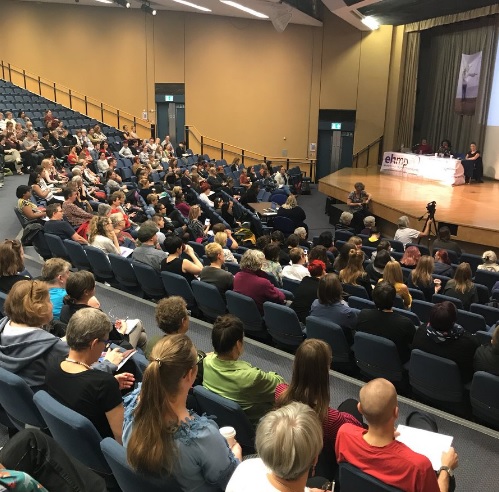
In October this year a meeting was held at Garden Court Chambers in London entitled ‘Progress and Challenges in Advancing Equality for Trans People in the UK’. It was hosted by the Human Rights Lawyers Association and the speakers included Bex Stinson from Stonewall and Michelle Brewer from TELI (Trans Equality Legal Initiative). Bernard and Terry from GIRES were in the audience and were also asked to speak. It was to be expected that the talks would focus on trans rights but nevertheless the extreme level of female erasure was breathtaking. When discussing the experience of trans people in prison for example, much was made of the human rights of a male bodied trans person to be strip searched by a person who matched his ‘gender identity’. One of the lawyers there had represented such a prisoner and had won the case. The word ‘dignity’ was used a lot. Not one human rights lawyer there even considered the dignity of the female prison staff asked to perform such an intimate task as part of a day’s work. In a similar vein, two of the speakers talked about the trans suicide rate in prison and both of them mentioned the most recent case, ‘just this last week’,  to hushed and respectful silence. The trans prisoner they referred to was a man called Martin Eatough who was serving a life sentence for violently raping a fifteen year old girl. He had begun his ‘transition’ in prison and was taking hormones but had not yet had any surgery. The sympathy shown to this rapist because he now came under the trans umbrella obscenely overlooked the rights of his victim.

No suicide in prison should be tolerated, whatever the offence or the sex of the perpetrator. However, due to the tireless work of Trans Media Watch, it is now increasingly the case that male crimes are being reported as female ones. So it seems from reading press reports that a man can be a woman when committing rape or murder, but that he becomes trans again if he commits suicide. It’s a double whammy for his victim: if a crime which she has experienced as male violence cannot be named (does she have to refer to him as ‘she’ for fear of committing a hate crime?) and then his suicide is elevated in the press due to his trans status (most other prison suicides are not reported individually) then where does that leave the rights of the victim to be treated with dignity, respect or sympathy?

An evening spent with human rights lawyers highlighted how large a disparity there is between trans support groups and women’s support groups. The tactics of  trans rights groups and allies to smear, no-platform and threaten people who do not support the dogma 100% has put women’s groups in an impossible position. Groups which cater for women, and are technically able to remain women-only under the current legislation, have in practice become overwhelmingly trans-inclusive. The mantra ‘transwomen are women’ is repeated ad nauseum to close down any argument, and women’s groups risk losing not only friends, but also jobs, and in some cases funding, if they voice any uncertainty. The trouble threatened by trans rights activists is often more than a small women’s centre can deal with.

High profile cases of no-platforming or public reprimand, such as Julie Bindel, Germaine Greer, Dame Jenni Murray, Chimamanda Ngozi Adichie and Linda Bellos have shown us that anyone can be a target of trans hate. They serve as a warning to us all. Best not to speak up.

On social media there is a constant stream of abuse from trans advocates and allies towards women who don’t believe everything they are told, as documented by the website terfisaslur. Some trans Twitter users seem to be making a career out of reporting feminists to their employers for stepping out of line. This has real life consequences such as the recent case of Anne Ruzylo, Labour party women’s officer in Bexhill and Battle. Accounts which challenge the trans narrative, such as transcrimeuk, are routinely shut down after mass reporting. The website was set up to collect data about trans crime because no public body is monitoring it. Trans lobbyists would prefer that you didn’t know these stats which contradict their own statements, and the press and prison service are colluding with this spreading of misinformation by recording crimes by gender identity instead of sex. This does not stop the majority of sexual crime being committed by males and the majority of victims being female, it just means we can’t talk about it. Claims by trans groups that there is no risk to women from male-bodied trans people are disproved by the number of male sex offenders in the UK currently identifying as women –  EITHER ‘transwomen’ have male rates of violent criminal offending OR males will pretend to be women when it suits them. One of these has to be true. Women have a right to be worried.

The highly-respected academic Heather Brunskell-Evans was recently made the subject of a disciplinary investigation by the Women’s Equality Party over her comments on the BBC Radio 4 programme The Moral Maze. She had expressed her view that caution was needed when diagnosing children as transgender. This resulted in complaints from trans members of the party, and the party was ‘quick to act’ in raising a complaint with the Executive Committee. The opposite view meanwhile, that ‘trans kids’ should be affirmed and celebrated in their chosen identity, is being taught in primary schools by groups such as GIRES and Mermaids, despite there being no long term evidential base for diagnosing a child as transgender. Feminists have not yet succeeded in even getting consent education added to PHSE lessons in schools, but a trans dogma that can lead to a lifetime of medicalisation and sterility is being added with no public consultation and little parental awareness.

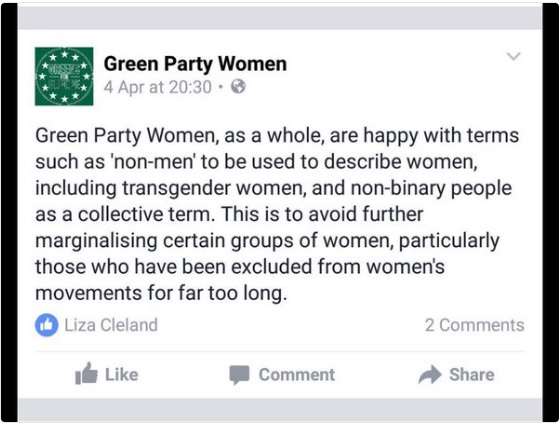
The Labour Party supports the updating of the GRA to include gender self ID and has recently appointed a nineteen year old man who identifies as a woman as its Women’s Officer in Rochester. The Green Party refers to women as ‘non-men’ in order to include trans and non-binary people in the category, although the category ‘man’ remains unaffected.  The Conservative Party is planning to push through gender self-identity after a consultation on changes to the GRA in the new year. Trans activists at the Anarchist Bookfair attacked women handing out feminist leaflets about the impacts of the GRA. It seems there is no longer a political home for women.

Along with the slurs and public shaming meted out to women who don’t agree with the new gender identity rules, there has been a refusal to debate the issues publicly by trans activists themselves. Meetings of women wishing to discuss the proposed changes to the Gender Recognition Act have been disrupted, even though speakers have been invited from the trans community (and subsequently failed to attend). A refusal to debate by trans spokespeople like Paris Lees has led to the cancellation of slots on BBC Newsnight, and, even more worryingly, a consultation by the NSPCC was cancelled after representatives from the trans community refused to debate with Sarah Ditum, calling her a ‘notorious transphobe’. (Top tip: call a woman a transphobe often enough and you can then justify calling her a notorious transphobe). Ruth Hunt, CEO of Stonewall, refused to answer questions put to her by Times journalist Janice Turner, for an article she was writing about trans children. Feminists have always wanted this debate to be balanced and transparent and public. It’s beginning to look as though trans activists have something to hide.

The outcome of the tactic of #NotaDebate is that when there is a conflict of interests which needs to be talked about there is little public understanding of the issues. Facts are hidden and simple mantras take their place. Trans people can call on the support of not only trans groups but also LGBT groups, human rights organisations, political parties and even women’s groups. Women have effectively been left with nothing. Not only that but the protected category of sex, intended to protect women from discrimination, has been neutered by the inclusion of men. Groups and political parties set up to support women and level the playing field now have to be ‘inclusive’ in order to survive, despite the fact that the sex category ‘women’ is by definition ‘exclusive’. Prizes, awards, sports and jobs reserved for women are being awarded to men in the name of inclusivity.  This is the natural consequence of giving away the word ‘woman’. We could still exclude trans-identified males from spaces reserved for women, if only we could name them as trans-identified males. Feminists are now increasingly adopting this choice of language in order to reclaim ‘Woman’ as a sex-specific category that belongs to us. We have to be able to assert our own boundaries.

The argument we have to contend with from trans activists and allies, is that  transwomen are women, and not only that, but they are the most oppressed and marginalised of all women so they deserve more support than the rest of us. The fact of male anatomy, biology and physiology evidently doesn’t change this and nor does the fact of male socialisation. The argument usually made is that ‘transwomen’ do not benefit from male privilege as they have never felt ‘male’, but aside from the fact that privilege does not work in that way, it is irrelevant anyway: what men benefit from is female socialisation. When women are brought up under the constructs of gender they are socialised into wanting to please, to be nice, to be kind, to care about other people. Stepping out of line is painful, and also it is punished. Women who speak out about gender are called TERFs and TERFs are the same as Nazis and Nazis deserve violence. At least, that’s the view peddled by Action for Trans Health (remember? The group invited to give evidence at the Trans Inquiry?)

When trans activists say trans lives are #NotaDebate what they really mean is that they refuse to discuss women’s rights and they refuse to discuss child protection issues. The focus on listening to trans people has proved to be indulgent and infantalising towards the people it is meant to help, and it has led to an extreme level of entitlement amongst activists, evidenced by the level of verbal and physical violence deployed.

It’s sometimes difficult to remember, amongst all the arguments, exactly what women stand to lose here. The sex category ‘female’ is being asked to absorb the sex category ‘male’. What women are being forced to accept could literally not be any more extreme.

So, that’s the point we’re at. Changes to the Gender Recognition Act are due for consultation in Spring 2018. Grassroots groups of women are springing up everywhere as more and more women realise what’s happening. On Facebook, on Twitter and on Mumsnet, increasing numbers of women are finding groups where they are allowed to debate, and real-life groups are forming off the back of these. Unfunded and voluntary for the main part, ordinary but extraordinary women are working together to protect the rights of all women. Our voice is finally being heard in the mainstream media. There will be a tipping point where the number of women refusing to be silenced will overtake the number of women too scared to speak up.

If you want to find out more, or join in, go and look at Fair Play for Women, Transgender Trend, A Woman’s Place, Mayday for Women, Youth Trans Critical Professionals, the Lesbian Rights Alliance, Socialist Feminist Network and more. Come and join us. Remember, as a clever feminist recently coined it, what TERF really stands for is Telling Everyone Real Facts. And someone’s got to do it.

The Thing about Toilets

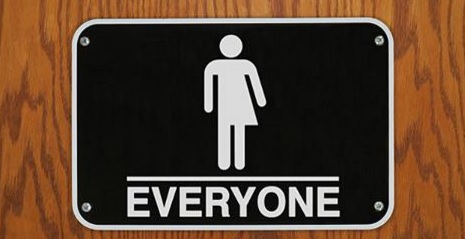
Everyone Toilets

The thing about toilets is that it’s not just about toilets. It’s about ALL the public spaces which could present a risk to women and/or children because of factors such as confined space, being locked in, restricted escape routes and being either explicitly or potentially in a state of partial/complete undress. These spaces include public toilets (no, not your private one at home, stupid), changing rooms in shops, gymns, leisure centres etc, prisons, rape crisis centres, dormitories, shelters and more.

The reason these spaces are SEX-segregated is that men can be violent and sexually predatory towards women and children (no, not all men, and yes, women can be violent too). The stats are stark, and divide the sexes up quite neatly according to likelihood of violence and abuse. 98% of sex offenders are men. Most of the victims are women and children. It is not just the most serious sex crimes which inform this public policy of sex-segregation however: there is a whole raft of other, lesser, crimes committed where men have access to women in intimate spaces. These include indecent exposure, voyeurism and sexual harassment. Added to that there are the almost exclusively male types of antisocial behaviour, such as indulging the fetish of listening to women urinate, public masturbation and peeing on the seat.

Some of the behavioural differences between men and women are well documented in the crime stats, but there are other differences too – those of biology. Men for example pee on the seat because they can. They have a penis to pee out of. Women on the other hand have to sit down on the seat to pee. At home it is annoying to have to shout at boyfriends, brothers, husbands or sons who fail to lift the seat before peeing and leave a mess they expect you to clean up, but it is far worse having to wipe up a stranger’s urine before you can sit down. Yes, women do leave drips on the seat sometimes, but copious splashes are largely a male speciality.

Talking of biology, there are different reasons that men and women need the provision of public toilets, apart from the obvious ones. For example, women have periods. Coping with the mess of an unexpected period might require an emergency change of underwear and the washing of bloody hands and/or knickers in the communal sinks. (Not just me right?) It’s embarrassing enough amongst strange women, but at least you can expect a degree of understanding. With men present it becomes mortifying. You might prefer to stay put in the cubicle all day rather than come out and face the shame. As a teenager I would have viewed the buying of a sanitary towel from a machine in the toilets completely unthinkable if boys had been present. In my eyes it would have been tantamount to shouting ‘LOOK AT ME – I’VE GOT A VAGINA!’

On that subject, it’s worth remembering that there is a large range of female people likely to be using the toilets provided in public facilities: it will include very young girls, teenagers just starting menstruation, women with mental health problems/learning disabilities, pregnant women, victims and survivors of rape, assault, male violence, domestic abuse or child sexual abuse, elderly women, women with physical heath problems/frailty, women suffering incontinence or menopausal symptoms, women of faith or with strong religious beliefs, mothers with babies, toddlers or young children who need the toilet and/or sinks, and women and girls in the middle of a bout of cystitis or thrush. That’s just off the top of my head. You can’t always tell by looking at someone whether or not they are surviving or suffering from anything, but it’s fair to assume that some female users of public conveniences will tick some of those boxes.

In conclusion, privacy, comfort AND safety are obviously all important considerations in the design of toilets if they are to be useful to women and girls, and so to be told (as I frequently have been) that ‘you’ll be quite safe: nobody can rape you because the cubicles have locks on the doors’, is an exercise in willfully missing the point.

Despite all this there is a recent trend for changing sex-segregated toilets into ‘gender-neutral’ or unisex toilets. Samira Ahmed tweeted of her experience at the Barbican:


Toilets are being re-designated as ‘gender-neutral’ or unisex in universities all over the US and the UK, and it’s not just in universities. Another Twitter user posted her photo of a toilet on the north Kent coast.


Many similar examples have been shared on social media, with the common denominator being that in every case it is the Ladies toilet which has been sacrificed to the ‘gender-neutral’ trend. Men are essentially now the protected sex. Men, WHETHER OR NOT THEY IDENTIFY AS MEN, are getting the toilets they want, plus access to the women’s toilets. Doesn’t seem fair really does it?

The results of a poll for Loose Women suggested that not everyone is happy with the way things are going:


The response to this tweet was a perfect example of the lack of understanding from (mostly) men who could not understand the problem that women might have with unisex toilets. A more interesting question in my view, is why so many men would jump at the chance of using the women’s toilet when they are finally allowed to? A possible explanation, courtesy of  Twitter, is a little unsettling.

https://twitter.com/volewriter/status/850096762652151809


The move towards ‘gender neutral’ toilets is a clumsy attempt to be trans-inclusive before any legislation is even in place, and without thinking it through properly. There are obvious and serious implications for women and girls, which have not been taken into consideration. The kind of low-level sex crimes detailed above are largely opportunistic: if the opportunity is there then someone will be there to take advantage. To those arguing that there is already legislation in place to prevent men abusing women and that therefore these changes will make no difference, I would say that, similarly, there is already a law to prevent abuse against trans people, so why do we need to change anything? It is like arguing against the provision of adequate street lighting because men will attack women anyway.

It may well be true that if a man wants to abuse a woman in a toilet he will do so whatever the sign on the door, but that is no reason to make it easier for him. As it stands at the moment a woman has the right to challenge a male in the Ladies toilet – this at least gives the woman some power, and shows that the law is on her side. The current changes, if they continue to gather pace, will put the boot firmly on the other foot.

The Women’s March and the Erasure of Women

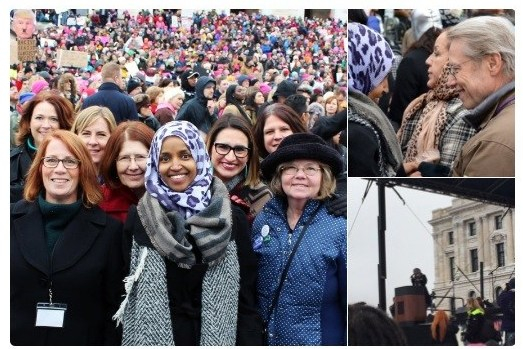
womens-march-somali-american

On Saturday January 21st the Women’s March on Washington took place in order to protest the potential effects the election of president Donald Trump would have on women’s rights in the USA. Conceived of by women, organised by women, networked and shared by women and overwhelmingly attended by women, the Women’s March became a chance for women worldwide to join in solidarity with their American sisters, and march for women’s rights in towns and cities all over the world. And this is what women did, in large numbers and in many places.

It is quite clear from the pictures that this was a women’s event, though it was by no means exclusionary – anyone could attend, but the focus was on women. In the UK for example there were many feminist and women’s groups represented:

It was a powerful opportunity to get across whichever feminist message meant the most to you, or whichever feminist campaign you have been working with, or simply to register your opposition to sexism. Although not all the signs and placards at the march were overtly feminist in nature, they were overwhelmingly so. Some of the subjects of inequality that women marched for included sexism, objectification and the sex trade, reproductive rights, political representation, violence against women and girls, women’s health and childcare. The other issues represented included racism and homophobia which obviously affect men too, and climate change and poverty which affect women disproportionately, as women bear the brunt of world poverty and the effects of climate change. I am trying to get across here the fact that even though there were some men present at the march, and even though some of the issues represented concern men too, you would have to be wilfully blind to ignore the fact that this was a women’s march, about women’s issues.

So why did the BBC do just that?

In the reports on BBC TV News on Saturday evening the march was referred to as an ‘anti-Trump’ march which was attended by lots of ‘people’. On BBC Radio 4 the same language was used, both on the Saturday evening and the Sunday morning news bulletins. We only got to learn that it was a ‘women’s march’ towards the end of the programme Broadcasting House, when one of the guest reviewers mentioned it. The choice of words really jarred after a day of following the march on social media and other news outlets, where the constant repetition of the words ‘women’s march’ had a feeling of power to it, which is a rare experience for women listening to the news. It felt as if the BBC had some kind of agenda. WHY was the word ‘women’ so dangerous to use?

Online it was a similar story, at least at first:

BBC online (thanks in part, I like to think, to a couple of tweets sent by myself and others…) changed their headline from ‘Anti Trump marches take place all over the world’ to ‘Women’s marches take place all over the world’. So thanks for that BBC. A small victory.

If the marches were just that: ‘anti Trump’, then I wonder why so many women came out the whole world over, in countries far and wide, none of which actually have Trump as their president? It doesn’t take much analysis to see that it was not Trump himself that the rest of the female world was protesting against, but the attitude towards women represented by Trump – an attitude which unfortunately can still be found all over the world, and which women still have to deal with on a day to day basis. The election of Trump acted as a catalyst for a powerful outpouring of dissatisfaction everywhere with the current state of women’s equality. The specific problems vary from culture to culture, but the strength of feeling is the same, and the election of Trump gave us a rallying point to express it.

It was not only the BBC which seemed intent on erasing the women from the Women’s March. Transactivists too were less than happy with the emphasis on the female population, particularly the biological aspects of being a woman:

Transactivism has been getting more and more extreme of late (the more it’s been allowed to get away with stuff…?) but this is a new low. Now we are being led to believe that simply HAVING A FEMALE BODY AND MENTIONING IT is transphobic and cissexist.

All women are now in the wrong.

Remind you of anything?

This is what happens when you allow men to dictate what you can and cannot say about your own body and your own experience. Women must simply disappear from the story in order not to hurt the feelings of trans people, and if we don’t do that we are wilfully contributing to their oppression. So it’s difficult, because we’re nice. We’ve been socialised to be nice. We don’t want to hurt anyone do we?

We need to wake up to this as women. On the one hand we have all that power and energy out there. We were funny and creative. We got angry. We did a good march:

On the other hand we are standing by when the very words we have to describe ourselves and our lived experience are being taken away from us. It has been happening for a while: Green Party Women call us ‘non-men’, to Sussex Police we are anyone who ‘self-identifies’ as a woman, to Planned Parenthood in the US we are ‘menstruators’ and to some people we are literally anyone who ‘doesn’t identify as male’:

brighton-hove-police-postermenstruatorswho-does-not-identify-as-malegreen-party-women-non-men

It’s time for women to wake up and stop being nice. The Women’s March felt like a celebration of how brilliant women are and what it looks like when we get angry. We should be more angry and we should be able to name the reasons for our anger. I hope the Women’s March has sown the seeds for further action and more awareness, but to be able to fight for your rights you need to be aware of how they are being eroded and who is doing the eroding.

It’s as if the BBC has sent a memo round saying ‘The word Woman is only to be used when it’s a case of a transwoman being done for murder or assault. Otherwise the word People will be sufficient. Woman’s Hour can apply for an exemption to this if and when it’s necessary.’

The trans lobby seems determined to erase all words to do with women, especially the biological ones, and many organisations have already capitulated. We now have birthing parents instead of mothers and chest feeding instead of breast feeding, amongst many more examples.

Is the timing coincidental or is the BBC’s choice of language meant to appease the trans lobby?

Women often find it hard to say no to men, but we really have to now. Current legislation around ‘gender identity’ will harm women and benefit men, and our ability to talk about this, let alone organise against it, is being eroded by the same ideology which is harming us in the first place. The downgrading of ‘sex’ as a category in favour of ‘gender identity’ has this one very important result: instead of the axis of oppression being male/female ( where 49% of the population who are male oppress 51% of the population who are female) the axis is being changed to cis/trans (where 99.97% of the population who are ‘cis’ oppress 0.03% of the population who are trans). It’s a clever way for men to say they are being oppressed by women, and it’s a reason we must all reject the category of ‘cis’ which only ever functions as a means to make us feel guilty when we assert our female rights, and to obscure the sex-based oppression we suffer. If 51% of the population cannot name their body parts for fear of upsetting the 0.03% this is an obvious and overwhelming injustice. You’d think.

The other result of this new language is that everything previously fought for on the axis of sex oppression becomes de-sexed, or, in common parlance, gender-neutral. It’s a tactic used by Men’s Rights Activists, for obvious reasons: if you can argue that domestic violence for example affects men almost as much as it affects women you can grab some of that (woefully inadequate) funding for yourself. Regarding trans people, if you can argue that transwomen (and particularly transwomen of colour) are the most oppressed of all then you have to give them priority treatment to compensate. Which is, I suppose, how two male-born speakers, one a self-confessed rapist and the other an apologist for child sexual exploitation, got to be two of the speakers at the Women’s March:

To get back to something positive, here is a reminder of the wonderful job women made of the Women’s March on Saturday:

And now let’s ensure that the complaints resulting from the Women’s March are seen for what they are: an attempt to silence and erase women. The (frankly ludicrous) assertion of trans rights over women’s rights, in response to the Women’s March, should be a wake up call to all of us.

If we don’t tackle this now then next time we need a protest march we may not even be allowed to call it a Women’s March.

An Argument for Excluding Men from the Prostitution Debate

I’m beginning to think that men shouldn’t be allowed to have an opinion on the sex trade, let alone be in charge of deciding the legislation around it. In the last few weeks we have found out that Keith Vaz is a punter, that the Lib Dems are happy with the idea of prostitution being on the careers curriculum at school, and that Jeremy Corbyn just doesn’t care that much:

corbyn-on-prostitution

On top of that, any of us foolhardy enough to air our opinions about prostitution on social media can expect without fail an onslaught from mansplainers such as this one:

victimless-crime-comment

This man is talking to a prostitution survivor.

So why do men have such difficulty understanding women on this subject?

Well, heterosexual sex is obviously different for men and women, partly due to physiology and partly due to social factors. Regarding the physiology of our sexual differences, the act of penetration for a man is not as intimate an experience as a woman’s experience of being penetrated; men usually orgasm from penetrative sex whereas the majority of women don’t. The way that women and men masturbate tells a story: men mimic the action of penetrative sex, women do something entirely different, involving the clitoris. Women can’t rely on sex with a man being any good, unless there is a certain amount of understanding from the man; men can usually come anyway.

Regarding social differences, women get all the bad sex words: slut, whore, hussy, slag, cock teaser, frigid bitch, prude, whereas men just get stud or player or the rather approving euphemisms Cassanova or Ladies’ Man. Men may get called impotent or worry about sexual performance, but they are not judged on the number of sexual partners they have in the same way that women are. Women get nearly all of the objectification and focus on body size and shape, whereas men don’t usually get this forensic examination of their ‘attributes’, and do not become public property for sexual appraisal as soon as they hit puberty. They therefore tend to have fewer body issues than women do.

Rape is a thing. Men commit 98% of sex crimes and around 96% of violent crime, and they tend to be generally bigger and stronger than women.

The cultural forces that shape men’s attitudes to sex are completely different to those that shape women’s. It’s not that women innately dislike sex, anymore than men do, but that the potential damage that heterosexual sex can do to women, both physically and mentally, is serious. A lot of men don’t get this: sex is good, therefore even if it’s coerced or forced or with someone you don’t fancy much, well, hey, it’s still sex – just not the *best* sex. Many men have a sneaking envy of women working in the sex trade: having sex all day for a living is a male fantasy: if you get to be a male porn star it’s an envy-inducing status to your mates. I believe that many men really don’t see that working in the sex trade can be such a bad thing for women. They think we’re making it up.

But if sex goes wrong for women, it’s not just disappointing – it can be painful, demeaning, damaging and soul-destroying. Or even life-threatening.

Men create and consume a sexual culture antithetical to women but which they see as normal, and pretty pleasurable. Under these circumstances it is very difficult for them to see that it might not be the same for a woman: it can take a huge leap of imaginative empathy, and not all men are capable of that. If men are to make the laws which predominantly affect women, they need to have an understanding of exactly why the law needs making, and unfortunately when it comes to sex many men still think with their dicks.

Of course it wouldn’t be possible to ban men completely from the discussion, but you’d think that if the laws around being a punter are up for debate, the very least you should expect is that it won’t be a punter who’s making them.

The campaign group Nordic Model Now! has a template letter if you’d like to write to your MP:

Support our Demands! Write to your MP

We Are All Non-Binary Now

I was born a female baby. I was not ‘assigned female at birth’, I was born female and this fact was noted: an F rather than an M went on my notes. The word ‘female’ in humans means the same as it does in other animals, that is: the sex which has the capacity to carry young and give birth. When people insist on using the phrase ‘assigned female at birth’ they are suggesting there is a choice being made, and that choice is dependent on belief systems, but actually, except in the very rare cases of people with some variations* of sexual development, there is no choice involved at all. Your sex simply is. The fact that it is ‘written down’ does not mean it has been ‘assigned’.

Now that’s been cleared up, let’s move on to gender. Gender is not sex: it is a set of characteristics commonly *associated* with your sex. Unlike sex, the meaning of gender is open to interpretation and its meaning can change, because it is a social construct rather than a biological fact, and social constructs are open to discussion and opinion. However, even if you mean gender and not sex when you are talking about being ‘assigned at birth’, this is still inaccurate. I was not ‘assigned a female gender’ at birth, I was simply born female, this was noted, and then I had gendered things thrown at me accordingly. It would be more accurate to say that I was ‘dressed in clothes which were assigned female’, and ‘given toys which were assigned female’, and ‘rewarded for exhibiting behaviours that were assigned female’. This is usually the way that gender is thrust upon you: it is done according to what is considered appropriate for the sex class you were born into.

Biological sex is dimorphic but gender exists on a spectrum, which has exclusively masculine at one end and exclusively feminine at the other. Whatever your biological sex, you can feel more comfortable at one end of the spectrum or the other, or anywhere in between, depending on your personality. In this sense it is obvious that one big difference between sex and gender is that sex is binary and gender is non-binary. Men can have qualities which are ‘assigned female’ and women can have qualities that are ‘assigned male’. In fact I would go so far as to assert that even the most ‘masculine’ of men still have a tiny bit of ‘feminine’ in them, and even the most ‘feminine’ of women still have a tiny bit of ‘masculine’ in them. We are all in fact ‘non-binary’ as regards gender. It gets confusing when people use ‘non-binary’ to mean a mixture of the two sexes or no sex at all, as this is impossible.

As a child I had a preference for toys and activities which at that time were assigned a masculine gender. I went through a phase of wanting to be a boy, and even pretended to be a boy, because all the boy stuff was so much more interesting to me than what was assigned for girls. I was genuinely ‘non-binary’, but in those days it was called ‘being a tomboy’. That was a possibility for girls at the time, although you were expected to grow out of it eventually. It was more difficult to remain gender-nonconforming as you got older. Suddenly it was labelled ‘being a feminist’ and that wasn’t quite as affectionately indulged as ‘being a tomboy’ was. Life can be made difficult for people whose gender identity does not match their biological sex: for women who present in a way that has been ‘assigned masculine’ or men who present in a way that has been ‘assigned feminine’ there is often resistance, or worse, from people more ‘matched’ in their sex and gender, who feel this non-conformity as a threat. One of the objections to the label ‘cis’ is the fact that it implies a conformity to gender that no individual in practice completely lives up to (or would want to).

Crucially, having a non-conforming gender identity does not mean you can change sex. You can present yourself as the opposite sex, usually by conforming to a different set of stereotypes from those associated with your own sex, but you cannot identify yourself out of the sex class into which you were born. Current transgender ideology has it that a combination of surgery and ‘identifying as’ makes you into the sex you want to be, but this is not the case: at best it can make it a possibility for you to ‘live as’ your preferred sex. You can change gender but you can’t change sex. It’s a nice idea, but when push comes to shove the truth will out. Maybe it’s a recognition of that truth which has led to a change from ‘transsexual’ to ‘transgender’ as a descriptor in the trans community.

When I was a student, the men who tried to rape me when I was hitch-hiking did not respect the rather masculine gender identity that I felt inside. They didn’t care that I had grown up preferring football and racing cars to dolls and make-up. They didn’t even care that I was wearing combat trousers and a donkey jacket! They just cared that I was female. Calling yourself ‘non-binary’ will not identify you out of that threat if you are a woman, and that is why we have sex-based rights for women: biological sex matters. When it comes to safety for women the way you ‘identify’ is a mere indulgence: it’s about as important as whether you consider yourself to be a Goth or a Punk for example, no more and no less. And, to be clear, people are not oppressed for being ‘non-binary’: they are oppressed by virtue of their female biology.

The current government inquiry on transgender rights is proposing to expand the rights of people in single-sex spaces, such as prisons, changing rooms, toilets and refuges, based on gender identity. At the same time, the definition of trans has been expanded to include ‘non-binary’ and ‘genderfluid’ people (which is great because that includes me!) (Hint: it includes everyone!). The recommendation is that gender identity should always be accepted as self-certified rather than proved by a medical opinion or a gender recognition certificate. In reality this means that women’s sex-based rights will disappear as gender-based rights will cancel them out: the two cannot co-exist. Male-bodied people (we used to call them ‘men’ when sex was the relevant criteria) will always be able to gain access to women-only spaces through the method of self-identifying as women. When you consider that women-only spaces have traditionally been fought for and implemented *because* of the threat of male violence, you can understand what a threat this is to women’s rights. Actually *being* a woman could be overridden by a man *claiming* to be a woman. What could possibly go wrong?

It is worrying that a government inquiry set up by the Women and Equalities committee can misunderstand so completely the connotations for women of the changes they are proposing. There were many submissions to the inquiry from women’s groups, which have clearly been ignored. We need to complain now, before the proposals become law, to try to get the message across before it’s too late. After all, we are all genderfluid, non-binary folk now and our voices deserve to be heard.


*Edited on 25/03/2019 to remove references to ‘intersex’ as it has become clear this is a misleading term. It has been increasingly used to suggest there is a third sex or that it is possible to be a mixture of the two sexes, which is not true. To make it more clear there is a move to replace the term with ‘disorders of sex development’ (DSD) or the less judgemental ‘variations in sex development’ (VSD) which I have chosen to use here.